Gray Zone Warfare When Should I Switch Ammo Types? Guide
Gray Zone Warfare when should I switch ammo types? Learn how SP, HP, FMJ, and AP differ, match rounds to armor, and prepare magazines for Rogue Ops combat.
Jump to
When Should You Switch Ammo in Gray Zone Warfare?
The wrong cartridge can turn a clear shot into a prolonged fight. For “Gray Zone Warfare when should I switch ammo types?” the practical answer is to change when your target calls for different penetration or expansion. Your next check for “Gray Zone Warfare when should I switch ammo types?” is whether you’re shooting exposed tissue, armor, or through an obstacle.
Switch toward AP when armored defenses are the problem; consider SP or HP when engaging unarmored enemies. In Update 0.5: Rogue Ops, SP and HP ammunition create larger wounds than FMJ and AP rounds. FMJ serves a different purpose, emphasizing penetration rather than the expansion associated with soft point and hollow point ammunition.
Make that choice before contact whenever possible. Prepare the appropriate loaded magazines while you have time to inspect your inventory, rather than trying to reorganize ammunition while an enemy is firing.
Keep these decisions separate:
- Cartridge choice: Match penetration or expansion to the target.
- Shot placement: Consider which body structures your projectile will reach.
- Weapon condition: Check whether worn components are affecting accuracy or handling.
An ammunition change addresses the first problem. It cannot substitute for the other two.
Official page: Gray Zone Warfare (grayzonewarfare.com)
Gray Zone Warfare When Should I Switch Ammo Types? Compare Rounds
Ammo abbreviations describe different projectile designs. They are more useful as clues about intended behavior than as a universal ranking.

| Ammo type | Full name | Relevant behavior |
|---|---|---|
| SP | Soft Point | Expands on impact and is effective against unarmored enemies |
| HP | Hollow Point | Expands on entry; creates larger wounds than FMJ and AP in Update 0.5 |
| FMJ | Full Metal Jacket | Emphasizes penetration; creates smaller wounds than SP and HP in Update 0.5 |
| AP | Armor-Piercing | Specializes in penetrating armored defenses |
Switch toward AP for armored targets
When you expect to shoot through armor, prioritize a cartridge designed for that job; that answers “Gray Zone Warfare when should i switch ammo types” for armored encounters. AP ammunition specializes in defeating armored defenses, while SP’s expansion is directed toward effectiveness against unarmored enemies.
Do not interpret “armor-piercing” as a guaranteed result against every protected target. Armor interaction depends on the projectile’s properties, and outcomes include deflection, penetration, and a projectile passing through one plate before being stopped by another.
Tip: If your intended shot crosses armor, choose ammunition for penetration before comparing wound size.
Avoid deciding solely from an enemy’s weapon. Update 0.5 changes weapon distribution by location, including different firearms for LLA units guarding drug labs. A recognizable rifle does not give you a complete picture of the protection covering your intended impact point.
Consider SP or HP for unarmored enemies
SP rounds expand on impact, making them effective against unarmored adversaries. HP rounds also expand, and Rogue Ops gives both categories larger wounds than FMJ and AP.
Tip: Consider SP or HP when your planned shots have an unobstructed path into unarmored tissue.
That distinction matters because penetration and wound size answer different questions. Penetration concerns getting through the material in front of the projectile. Expansion affects what happens as the projectile enters the target.
Larger wounds do not provide a fixed shots-to-kill promise. Gray Zone Warfare models anatomical injury, so where the bullet travels through the body remains important.
Keep FMJ’s role in perspective
FMJ emphasizes penetration, but it is not interchangeable with AP. Projectile construction matters: a soft lead core and a tungsten core behave differently when encountering barriers.
Tip: Read the cartridge designation instead of treating every round within one caliber as equivalent.
Sharing a caliber establishes neither identical terminal behavior nor identical suitability for an armored target.
Check Shot Placement, Barriers, and Range Before Switching
For “Gray Zone Warfare when should I switch ammo types?” inspect the shot itself before blaming your current ammunition. A bullet hitting an obstacle, striking armor at an angle, or missing important anatomy presents a different problem from a clean hit into exposed tissue.
Gray Zone Warfare’s ballistics account for energy, velocity, penetration, projectile deformation, and interactions with the body. Your ammunition participates in that system; it does not operate as an isolated damage number.
| Factor | How it affects the shot |
|---|---|
| Energy and velocity | Help determine projectile impact and effectiveness |
| Projectile construction | Influences deformation and penetration |
| Impact angle | Affects penetration and ricochet behavior |
| Intervening barriers | Can alter penetration and projectile behavior |
| Anatomical path | Determines which organs, bones, and tissues are affected |
Change the angle when the obstacle is the problem
A shot through a fence or wall has another material to defeat before reaching the enemy. Projectile behavior can change after that impact, including deformation and destabilization.
Tip: Reposition for a clear line of fire before spending more ammunition through the same obstruction.
AP’s penetration capabilities can matter around barriers, but ammunition choice does not remove the influence of the obstacle or impact angle. Do not turn a cartridge label into an assumption that every wall or fence is transparent to your shots.
Separate distance from armor
Velocity is part of the ballistics calculation, but distance alone does not tell you whether to choose SP, HP, FMJ, or AP.
Tip: Choose for the target and the shot path, then account for distance when placing the shot.
If you cannot distinguish the enemy’s protection or identify a clear opening, improve your view before committing ammunition. Switching cartridges without understanding what you are trying to penetrate leaves the central decision unresolved.
Account for your own stability
Running and jumping compromise stability, and prolonged aiming can also introduce sway. Those effects can make a cartridge seem ineffective when the intended hit never lands.
Tip: Let your aim settle and use deliberate shots before judging whether an ammunition change helped.
Compare similar engagements where possible: the same weapon, a comparable target, and a similarly clear shot. Changing the gun, ammunition, angle, and distance together makes the result harder to interpret.
Prepare Magazines So the Intended Ammo Is Available
The inventory side of “Gray Zone Warfare when should I switch ammo types?” deserves attention before deployment. Carrying loose cartridges and carrying a loaded, accessible magazine serve different purposes.
 Image: Steam / MADFINGER Games, a.s.
For magazine-fed weapons, ammunition goes into compatible magazines. Reload access also depends on where those magazines are stored.
| Inventory action | Method |
|---|---|
| Repack a magazine | Drag a compatible ammunition stack onto the magazine |
| Choose ammunition through the menu | Right-click the magazine, select Load, and choose the ammunition type |
| Keep magazines available for reloading | Place them in a container marked with a lightning bolt |
| Store rifle magazines accessibly | Use suitable rig or belt space rather than the backpack |
Prepare your loadout in a deliberate order:
- Check compatibility. Match the cartridge to the weapon and magazine.
- Choose the projectile type. Decide whether your expected shots call for expansion or penetration.
- Load the magazines. Use the ammunition stack or the magazine’s Load menu.
- Check storage. Keep reload magazines in appropriate accessible containers.
- Inspect before leaving. Confirm that the magazines you intend to use contain the selected ammunition.
Tip: Keep magazine contents consistent when you want predictable behavior across successive reloads.
If you are changing from an expansion-focused load to AP, inspect the magazines you prepared earlier. A new ammunition stack in your inventory does not describe the cartridges already loaded into them.
Use cover for inventory work in the field. If a fight exposes a mismatch between your ammunition and the target’s armor, create space to make the change deliberately. Avoid remaining exposed while inspecting stacks or repacking magazines.
Reassess Your Loadout for Rogue Ops Encounters
In Update 0.5, “Gray Zone Warfare when should I switch ammo types?” also connects to enemy behavior and mission preparation.
AI enemies can use bandages, selected factions can throw grenades, and Tier 3 and new Tier 4 locations have increased AI difficulty. These changes give you reasons to prepare appropriate ammunition before entering a demanding area.
Tip: Finish preparing magazines before approaching a difficult objective, and avoid planning a fight around bleeding alone. AI can bandage themselves.
The larger wounds produced by SP and HP remain relevant, but Rogue Ops also adjusts bleeding limits by body part. Wound size should not be translated into a guaranteed bleed-out time.
Match preparation to the activity
Warfare uses PvEvP, where smuggling and hunting create opposing player objectives. Joint Operations uses PvE, with hunting activities involving regular AI enemies.
Tip: In Warfare, prepare for the possibility of player opposition along your route. In either mode, base your cartridge choice on the protection and obstacles you expect to encounter.
The mode changes who can oppose you; the underlying decision still concerns the target and your intended shot.
Inspect durability before spending more ammunition
Weapon wear can affect handling, accuracy, fire rate, and other component-dependent characteristics. Different ammunition types also produce different durability loss per shot because wear depends on projectile kinetic energy.
| Durability mechanic | Effect |
|---|---|
| Firing | Wears weapon components, with wear varying by ammunition |
| Lower component durability | Can reduce weapon performance |
| Damaged optics | Can impair the view through the sight |
| Weapon or component at 0% | Becomes broken and unusable |
Tip: Check the weapon and its components when your shots become harder to place. Do not assume a different projectile will correct a damaged sight or degraded accuracy.
Keep ammunition changes tied to a specific need: penetrating protection, expanding in exposed tissue, or addressing an obstacle. That gives each change a purpose you can evaluate during your next engagement.
FAQ
Gray Zone Warfare when should I switch ammo types?
Switch when the target or shot path changes the penetration you need. Prioritize AP for armored defenses, and consider SP or HP for unarmored targets. Prepare compatible loaded magazines before contact whenever possible.
Did Update 0.5 change SP and HP ammunition?
Yes. Rogue Ops makes SP and HP rounds create larger wounds than FMJ and AP rounds. Shot placement and the projectile’s path through the body still matter.
Why can’t I reload with magazines in my backpack?
Reload magazines need to be in an accessible container marked with a lightning bolt. Put suitable rifle magazines in your rig or belt. Carrying loose ammunition also requires loading it into a compatible magazine.
Will better ammunition fix poor accuracy?
Different cartridges change projectile behavior, but weapon condition and your stability also affect shooting. Inspect worn components and damaged optics, and let your aim settle after movement before evaluating ammunition performance.
Continue with
 Gray Zone Warfare All Weapons: Rogue Ops Arsenal GuideExplore Gray Zone Warfare all weapons, including Rogue Ops additions, rifle options, sidearms, ammo changes, and practical tips for building your loadout.
More in Weapons & Ammo

Gray Zone Warfare Best Night Vision: NVG Gear Guide
Gray Zone Warfare best night vision guide: compare PVS-7, PVS-14, and PVS-31A, build a compatible helmet setup, and handle IR aiming and glare after dark.
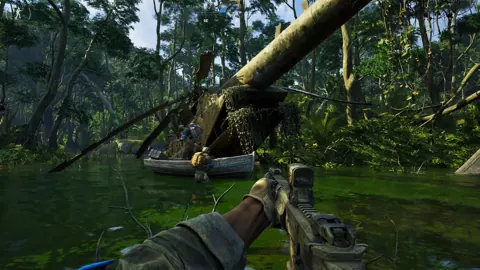
Gray Zone Warfare Flashlight: How to Equip and Use It
Get your Gray Zone Warfare flashlight working with mounting steps, tactical controls, M4A1 and Glock 17 setups, plus fixes for common attachment problems.
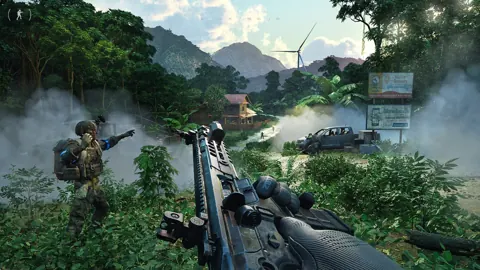
Gray Zone Warfare L403A1 Location: Sawmill Item Guide
Find the Gray Zone Warfare L403A1 location at Sawmill, check the Range & Rifle collectible coordinates, and plan your search for Rogue Ops Update 0.5.
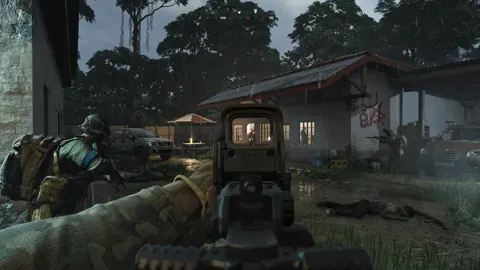
Gray Zone Warfare M14 Location: Black Hawk Unlock Guide
Find the Gray Zone Warfare m14 location at Hunter's Paradise, collect the Range & Rifle magazine, and unlock Banshee's Black Hawk rifle with this guide.
Continue exploring
Join the community
Official channels for news, updates and player help: