Gray Zone Warfare Hideout: Rooms, Crafting & Upgrades
Build your Gray Zone Warfare hideout with a guide to all three rooms, crafting, upgrades, and smuggling. Plan your loot runs and keep progression moving.
Jump to
What Is the Gray Zone Warfare Hideout?
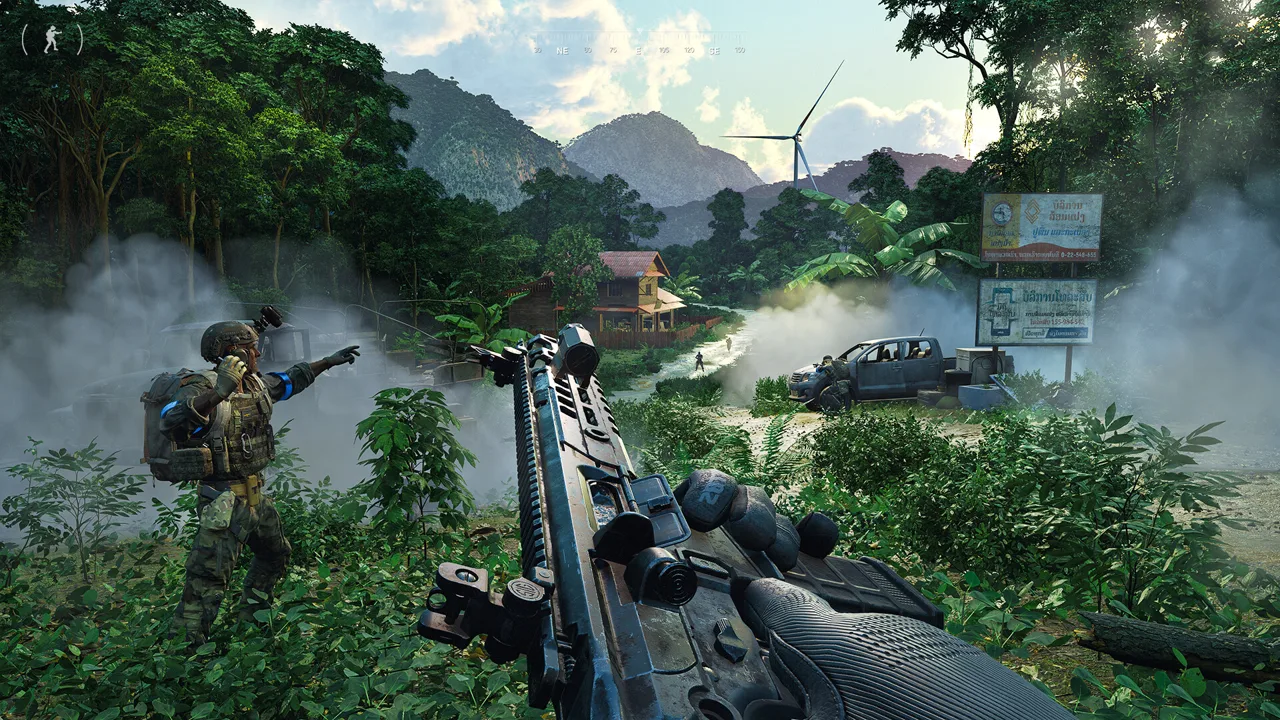
Your next loot run can build something that lasts beyond another gear purchase. The Gray Zone Warfare hideout adds room upgrades, crafting, and production to your progression, giving scavenged materials a purpose beyond their sale price. With the Gray Zone Warfare hideout introduced in Update 0.5: Rogue Ops, bringing home useful components now feeds a second gameplay loop alongside tasks and vendor reputation.
Rogue Ops launched on October 22, 2026. Its initial Hideout includes three rooms, each with three upgrade levels:
| Room | Main function | Connected activities |
|---|---|---|
| Laboratory | Produces medical products and drugs | Production, semi-passive income, and specific smuggling contracts |
| Electronics Workshop | Disassembles, modifies, and assembles mechanical and electronic components | Crafting, hacking tools, and task components |
| Utility Room | Supplies electricity to Hideout equipment | Operating equipment and supporting the other rooms |
The connection between those rooms matters. Power supports your equipment, workshop capabilities depend on devices and unlocked recipes, and Laboratory production needs both equipment and ingredients.
Keep completing tasks and building vendor reputation while developing the Hideout. Rogue Ops adds another progression path alongside those activities, with new reasons to explore Lamang and bring back particular resources.
The longer-term direction is preparation for Ground Zero. Research and expanded Hideout functionality are planned for future updates; the current 0.5 system centers on building, upgrading, crafting, and production.
Official page: Gray Zone Warfare (grayzonewarfare.com)
How the Three Hideout Rooms Work
Each room handles a different part of your operation. Plan your Gray Zone Warfare hideout around the products or capabilities you want, then work backward through the equipment and materials they require.
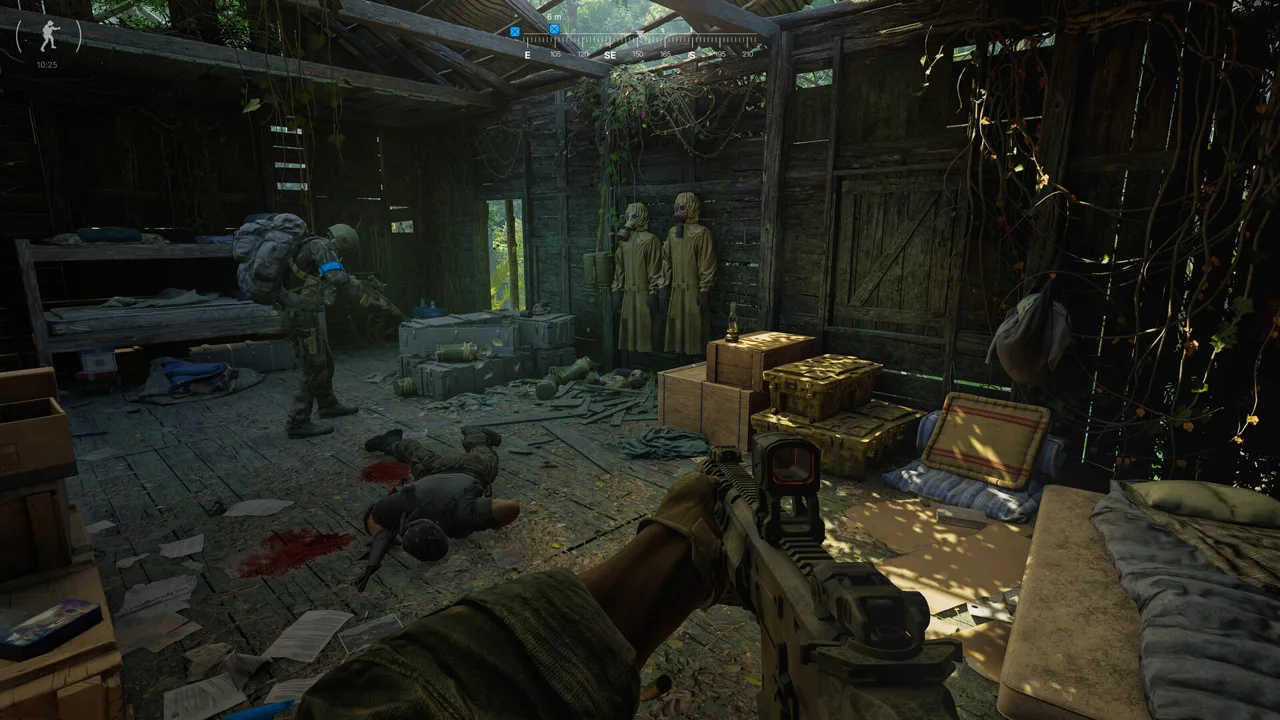 Image: Steam / MADFINGER Games, a.s.
Laboratory: Production and Smuggling Supplies
The Laboratory produces specialized substances, including medical products and drugs. It also creates products needed for specific vendor smuggling contracts, connecting your preparation at home with deliveries across Lamang.
Getting it operational requires specialized, high-end equipment. That equipment can be expensive and difficult to acquire, and you also need resources and components for construction and upgrades. Production requires ingredients gathered in the world.
Separate those needs when planning a run:
- Gather components for the equipment you want to build or upgrade.
- Collect ingredients for the products you intend to manufacture.
- Prepare the contraband required by your chosen smuggling contract before accepting it.
The Laboratory provides a source of semi-passive income, but it still depends on supplies and equipment. Budget for those inputs before spending your remaining money on a weapon upgrade.
If a contract needs a manufactured product, include its production in your preparation. The delivery timer begins once you accept the contract, so finish gathering the required resources beforehand.
Electronics Workshop: Components, Recipes, and Hacking
The Electronics Workshop lets you break down certain items and work with mechanical and electronic components. Those components can support crafting or task completion.
Recipes must be unlocked before you can produce their corresponding items. Workshop devices can also be unlocked and upgraded to expand what the room can do.
One key craft is the hacking tool, which comes in three tiers. These tools let you bypass electronic locks and enter restricted areas, giving workshop development a practical use during exploration.
Choose a crafting target before collecting materials. Then gather the components associated with that target, rather than filling your available space with items that have no immediate use in your plan.
Keep recipe access and component supply in mind together. A pile of materials alone does not remove the requirement to unlock the relevant recipe.
Utility Room: Electricity for Your Equipment
The Utility Room supplies the electricity needed to run Hideout equipment and support the other rooms.
Include power requirements when planning your Gray Zone Warfare hideout upgrades. Before committing resources to a production goal, account for the electricity needed to operate the equipment involved.
The Utility Room is also scheduled to gain more functionality in later updates. In 0.5, its established role is supplying power.
Crafting, Disassembly, and Smarter Loot Runs
The Gray Zone Warfare hideout changes how you evaluate loot. An item's usefulness can now come from its role in construction, its components, or its place in a production chain.
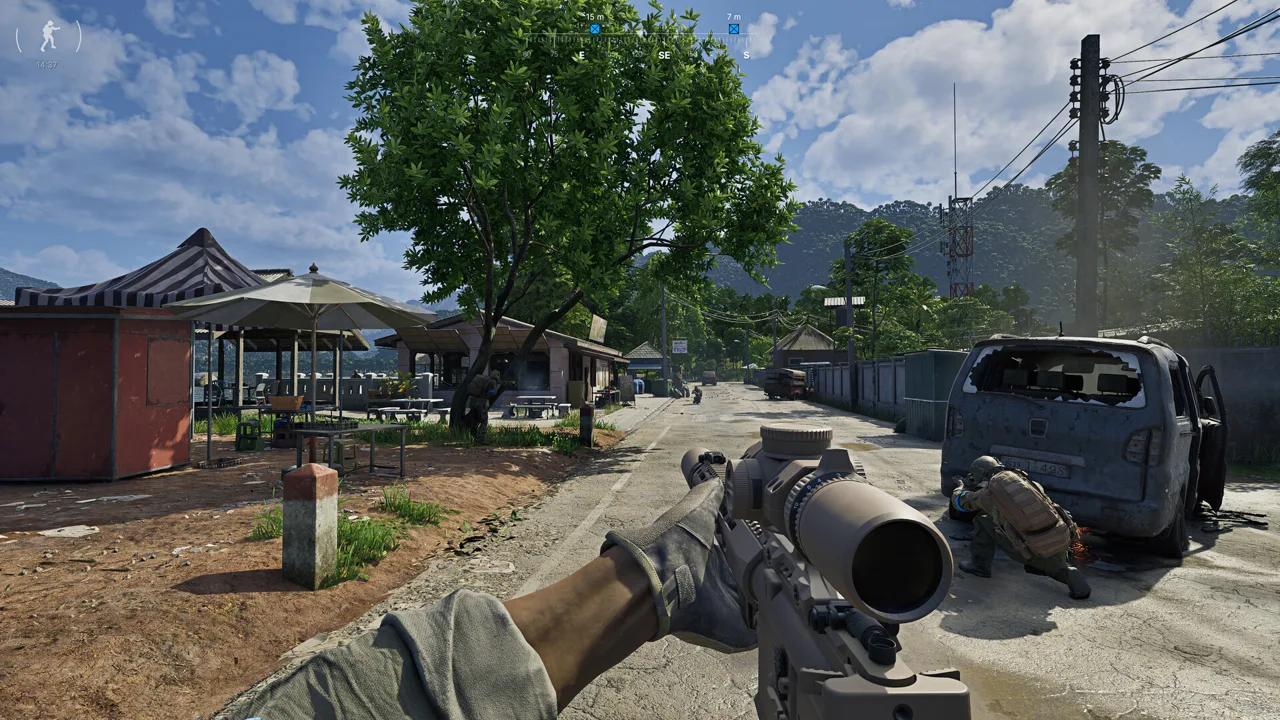 Image: Steam / MADFINGER Games, a.s.
Rogue Ops adds loot needed for Hideout building, increases the number of hidden stashes, and adjusts loot distribution to better fit individual locations. High-value loot also spawns less frequently, making cash management part of your upgrade planning.
Before selling an item you intend to use, compare its sale value with its role in your next project. Keep materials tied to an active goal and sell around that plan.
Understand Which Actions Take Time
Crafting, production, and disassembly have different timing:
| Activity | How it works in 0.5 | Timing |
|---|---|---|
| Crafting | Creates items after their recipes are unlocked | Almost immediate |
| Production | Manufactures products, including Laboratory substances | Takes longer than crafting |
| Disassembly | Breaks certain items into individual components | Takes longer than crafting |
Plan around the slower actions. Complete the disassembly needed for a craft before preparing a departure, and finish production required for a delivery before accepting that contract.
Avoid treating all loot as interchangeable crafting material. Only certain items can be dismantled, and recipes have their own requirements. Build your collection around the item you want to make.
Give Each Trip a Specific Purpose
Use a short checklist to connect exploration with progression:
- Choose the room, device, or recipe you want to develop.
- Identify the resources or components needed for that goal.
- Gather production ingredients when they overlap with your plans.
- Retain items needed for tasks before selling or dismantling them.
Location-appropriate loot gives you a reason to search with a particular material in mind. Combine that search with tasks when your objectives overlap.
Tracking Tags and Stims also change your supply planning in Rogue Ops: both have been removed from vendor sales and moved into crafting. Include those needs in your workshop and production decisions instead of budgeting for a vendor restock.
Hacking tools add another reason to invest in crafting. Their three tiers support access through electronic locks, linking the materials you collect with new environmental interactions.
How Hideout Production Connects to Smuggling
Smuggling turns preparation into a timed delivery. Your Gray Zone Warfare hideout supports this loop through Laboratory products required for particular vendor contracts.
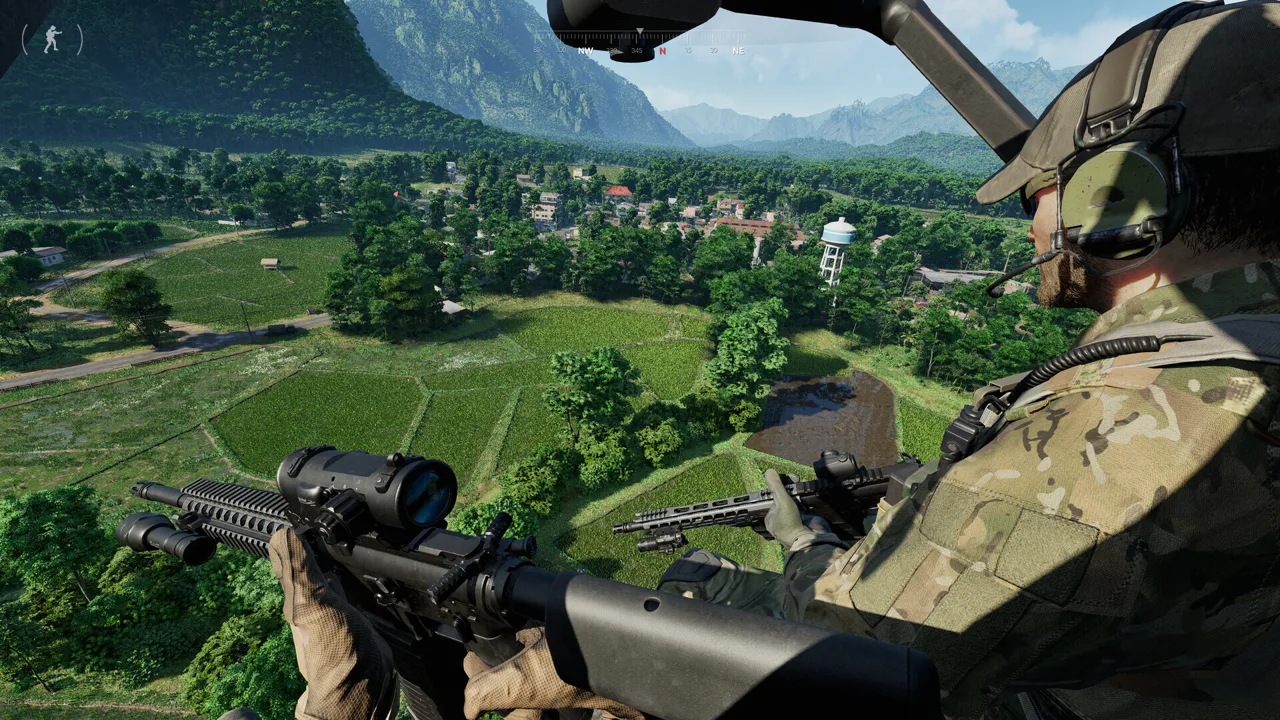 Image: Steam / MADFINGER Games, a.s.
Gather the necessary resources and contraband before accepting a contract. Once accepted, you have one hour to transport the shipment across Lamang and deposit it in the designated smuggling zone.
| Contract stage | What happens |
|---|---|
| Gather supplies | Collect the required resources and contraband before acceptance |
| Hand over contraband | Give the goods to the corresponding vendor |
| Locate the shipment | The vendor marks a pickup location on your map |
| Collect the backpack | Pick up the visibly identifiable smuggling backpack |
| Deliver the shipment | Reach the designated smuggling zone and deposit it before time expires |
The backpack makes its carrier recognizable. In Warfare, that creates a direct risk from players pursuing opposing objectives.
Plan your route and supplies before accepting the contract. Leave time for combat and interruptions instead of treating the full hour as travel time.
Know What Fails a Contract
A smuggling contract fails if:
- You die.
- The one-hour limit expires.
- The smuggling backpack is placed in another player's stash.
Keep those conditions in mind when coordinating with a squad. In particular, avoid using another player's stash as temporary shipment storage.
Choose Your Mode With the Delivery Risk in Mind
Smuggling and hunting operate within both game modes, with different opposition:
| Mode | Smuggling and hunting encounters |
|---|---|
| Warfare — PvEvP | Smugglers and hunters pursue opposing goals, creating player encounters around deliveries and interceptions |
| Joint Operations — PvE | Hunting activities involve regular AI enemies |
Joint Operations keeps these activities within PvE combat. Prepare for armed resistance while completing the delivery.
Warfare adds the possibility of interception by other players. Account for the visible backpack when choosing your route, and coordinate movement before collecting the shipment.
Vendor relationships matter, too. Different vendors offer different opportunities, and your actions can improve or damage their reputation. Consider that relationship alongside the immediate payout when choosing an activity.
Plan Your Hideout Progression Around Clear Goals
Keep your Gray Zone Warfare hideout development focused on a capability you will actually use. Choose a craft, production target, or contract, then gather what that objective needs.
Use this sequence to organize your preparation:
- Choose a goal. Pick an item to craft, a product to manufacture, or a contract to prepare.
- Account for requirements. Include the relevant recipe, device, equipment, materials, and power needs.
- Gather with that goal in mind. Preserve useful task items and components before selling your haul.
- Finish preparation. Allow time for production and disassembly.
- Accept a delivery when ready. Start the timed portion after gathering the required supplies.
This is a planning sequence, rather than a mandatory room upgrade order. Follow the requirements of your chosen project and keep enough resources for the fieldwork needed to supply it.
Returning From Update 0.4
Rogue Ops uses a soft wipe. Completed tasks, rank, unlocked apparel, vendor levels, and statistics carry forward from 0.4, while locker contents and money are wiped.
When transferring existing character progression into 0.5, you choose either PvE or PvEvP. That choice is irreversible, and your faction stays the same.
Choose the mode where you want that existing progression to continue. Up to four playable characters are supported, with separate PvE and PvEvP progression. You cannot keep two characters with the same faction-and-mode combination, and character deletion is limited to one per week.
For your next session, pick one concrete Hideout objective and prepare around it. Bring back the components for a device, finish a production requirement, or assemble the supplies for a contract before starting its timer.
FAQ
Is the Gray Zone Warfare hideout available now?
Yes. The Hideout arrived with Update 0.5: Rogue Ops on October 22, 2026. Its initial version has a Laboratory, Electronics Workshop, and Utility Room, with three upgrade levels for each room.
What can you craft in the Hideout?
The Electronics Workshop supports component work and crafting, including hacking tools in three tiers. Tracking Tags and Stims have also moved from vendor sales into crafting in 0.5. Recipes must be unlocked before producing their corresponding items.
Can you do smuggling activities in PvE?
Yes. Joint Operations includes these activities with regular AI enemies. Warfare uses opposing smuggler and hunter objectives to create PvEvP encounters. Accepted smuggling contracts have a one-hour delivery limit.
Which Hideout room supplies power?
The Utility Room provides electricity for equipment and supports the other rooms. Include its power role when planning the equipment needed for your crafting and production goals.
Continue with
 Gray Zone Warfare Upgrade Stash Size: Locker GuideGray Zone Warfare upgrade stash size explained: compare locker milestones, edition sizes, and Rogue Ops storage priorities to make room for your next run.
More in Progression

Gray Zone Warfare Blueprints: Unlocks and Locations
Find Gray Zone Warfare blueprints, explore nine magazine locations, and understand weapon unlocks, Hideout crafting, and progression changes in Rogue Ops.
Gray Zone Warfare Handshake Level 3: Progression Guide
Work toward Gray Zone Warfare handshake level 3 with task and trading tips, reputation rules, and Rogue Ops progression advice for your trip into Lamang.

Gray Zone Warfare Vendors: Reputation and 0.5 Guide
Learn how Gray Zone Warfare vendors work in Rogue Ops, build reputation, find Vulture, and plan your gear purchases, crafting, and smuggling contracts.
Continue exploring
Gray Zone Warfare Invite Friends: Squad Setup Guide
Gray Zone Warfare invite friends guide: learn squad setup, match factions and modes in Update 0.5, join deployed teammates, and troubleshoot invite issues.
Gray Zone Warfare PvE Guide: Modes, Progression & Tips
Explore Gray Zone Warfare PvE in Rogue Ops 0.5, including Joint Operations, separate progression, Hideout crafting, healing, and practical survival tips.
Join the community
Official channels for news, updates and player help: