Gray Zone Warfare Vendors: Reputation and 0.5 Guide
Learn how Gray Zone Warfare vendors work in Rogue Ops, build reputation, find Vulture, and plan your gear purchases, crafting, and smuggling contracts.
Jump to
How Gray Zone Warfare Vendors Work in Rogue Ops
Gray Zone Warfare vendors connect your completed tasks to better equipment for your next deployment. Building reputation unlocks more gear and supplies, giving your mission choices a purpose beyond the immediate payout. Understanding Gray Zone Warfare vendors also helps you navigate Rogue Ops, where crafting, smuggling, and equipment found in the world expand your progression options.
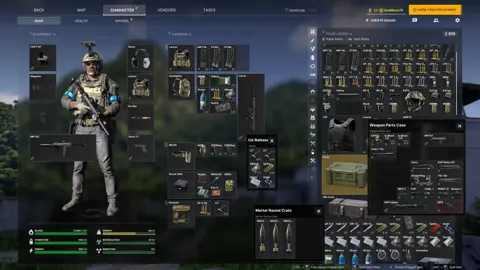
Vendors sell equipment, buy eligible loot, and offer work that builds your standing with them. Their specialties give you different reasons to return: replacing protective equipment, supplying a weapon, or advancing toward another inventory tier.
Reputation is tracked separately for each vendor. Progress with one trader does not represent your relationship with everyone else, so choose your tasks with a particular equipment goal in mind.
Handshake and Gunny cover familiar equipment categories, while Vulture has an important access change in Update 0.5:
| Vendor | Trading focus or access |
|---|---|
| Handshake | Protective equipment and carrying gear, including helmets, armor, backpacks, and tactical rigs |
| Gunny | Weapons, ammunition, magazines, weapon parts, and attachments, with a NATO weapon specialty |
| Vulture | Available through the standard vendor screen in Rogue Ops rather than through Combat Outposts |
Use those specialties to narrow your shopping. Check Gunny when assembling a weapon and Handshake when replacing your carrying or protective equipment.
For Vulture, open the regular vendor interface. You no longer need to travel between Combat Outposts to reach him in Update 0.5.
The relationship between Gray Zone Warfare vendors and equipment is also less exclusive now. Vendor reputation still matters, but the Hideout introduces another route to useful items, and most weapons added in Rogue Ops are found throughout Lamang rather than purchased.
Official page: Gray Zone Warfare (grayzonewarfare.com)
Build Vendor Reputation Around Your Equipment Goals
Completing vendor tasks builds reputation and opens access to better supplies. Smuggling and hunting add more opportunities to earn money and improve vendor relationships in Rogue Ops.
Start by deciding what you need from progression. Pick a practical goal, such as access to equipment you regularly replace, then direct your attention toward the trader connected to it.
Avoid choosing every task reward solely by its cash value. When a decision involves competing vendors, compare the reputation outcome with the equipment you want to access.
Choose Between Vendors Deliberately
Earlier progression choices illustrate why a blanket “always side with this vendor” rule is too rigid.
In January 2025, level-three inventory included Delta backpacks from Turncoat, a large keyholder case from Banshee, and AK-308 magazines from Artisan. Those were different reasons to prioritize different traders.
Use those examples as a planning principle: identify a specific unlock before committing to a reputation grind. For Rogue Ops purchases, inspect the current vendor inventory rather than building your entire plan around an older item price or shopping list.
Handshake and Gunny also had substantial task opportunities in that earlier progression cycle. That history explains the temptation to favor other vendors during competing assignments, but Update 0.5 adds new tasks and activities to the picture.
Choose based on your current objectives and standing. Keep the gear you actually use at the center of the decision.
Account for Reputation Consequences
In Rogue Ops, your actions can improve or damage relationships with individual vendors. Smuggling and hunting therefore belong in the same planning process as ordinary tasks.
Before committing to an activity:
- Identify the vendor involved.
- Read the objective and any displayed consequences.
- Compare the reward with your current equipment goal.
- Gather the necessary resources before starting a timed contract.
Keep Gray Zone Warfare vendors on a short list of immediate priorities instead of trying to advance every relationship at once. Choose the equipment access you need next, then work toward it through the activities available to that character.
What Update 0.5 Changes About Buying and Crafting
Rogue Ops changes several purchasing habits that made sense before the update. Some items have moved into crafting, Vulture has moved into the regular interface, and new weapon acquisition emphasizes exploration.
These changes matter whenever you are deciding whether to spend money, keep a component, or head back into the field.
| Item or system | Update 0.5 behavior |
|---|---|
| Vulture access | Uses the standard vendor screen; no longer tied to Combat Outposts |
| Tracking Tags | No longer sold by vendors and must be crafted |
| Stims | No longer sold by vendors; crafting provides a route to obtaining them |
| Most newly added weapons | Found throughout the world rather than purchased from vendors |
| High-value loot | Spawns less frequently as part of the economy rebalance |
Stop searching vendor inventories for Tracking Tags and Stims. Move those needs into your crafting plans.
For the seven added weapon platforms—AUG, Benelli M4, G3, G36, FAMAS, UMP, and Glock 18C—plan around exploration as well as shopping. Most new weapons enter your inventory through the world, and rare weapon builds have low drop rates.
Give Loot a Purpose Before Selling It
The Hideout makes more items useful beyond their sale value. Building rooms, upgrading equipment, producing substances, and assembling components all create reasons to retain materials.
The Electronics Workshop supports disassembly, modification, and assembly of mechanical and electronic components. Certain items can be dismantled into parts used for crafting hacking tools or completing tasks.
Check those uses before selling something simply because it looks like miscellaneous loot.
Crafting recipes must be unlocked before you can produce their items. Crafting itself is almost immediate, while production and disassembly take longer. Separate those processes when preparing for a session; an item entering production is a different commitment from an immediately crafted tool.
Connect the Hideout to Vendor Work
The Laboratory produces specialized substances, including medical products and drugs. Some of its products are required for vendor smuggling contracts.
The Utility Room supplies electricity for Hideout equipment and supports the other rooms. Each of the three rooms has three upgrade levels in this initial Hideout implementation.
Plan Gray Zone Warfare vendors and Hideout development together. Keep ingredients for a contract you intend to run, and check your crafting requirements before turning a full bag of materials into cash.
Use Smuggling and Hunting to Expand Your Progression
Smuggling and hunting offer additional ways to earn money and build vendor reputation in Rogue Ops. Each vendor offers different opportunities, and the activities connect field operations with resources collected or produced beforehand.
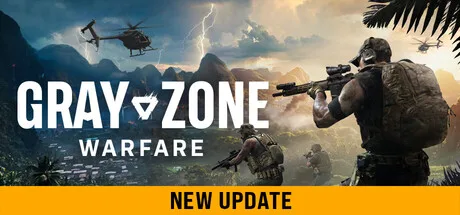 Image: Steam / MADFINGER Games, a.s.
Smuggling starts with preparation. You must gather the required resources and contraband before accepting the contract.
After handing the contraband to the corresponding vendor, you receive a marked pickup location for a smuggling backpack. That backpack is visibly recognizable, making its carrier a potential target.
| Contract stage | Required action or rule |
|---|---|
| Preparation | Gather the required resources and contraband before accepting |
| Vendor handoff | Give the contraband to the corresponding vendor |
| Shipment pickup | Collect the smuggling backpack at the marked location |
| Delivery | Reach the designated smuggling zone and deposit the shipment |
| Deadline | Complete the transport within one hour of accepting the contract |
| Failure conditions | Death, expiration of the timer, or placing the backpack in another player’s stash |
The one-hour timer begins when you accept the contract. Finish your resource gathering beforehand, and leave enough playtime for the delivery.
Keep the backpack’s failure conditions in mind throughout the trip. Placing it in another player’s stash ends the contract in failure; it is not a way to preserve the shipment for later.
Death also fails the contract. Treat staying alive as part of the delivery objective when deciding whether to take an optional fight along the way.
Understand the Difference Between Modes
In Warfare, the PvEvP mode, smugglers and hunters have opposing objectives. A shipment creates a reason for other players to intercept its carrier.
In Joint Operations, the PvE mode, hunting activities involve regular AI enemies.
Choose activities with that distinction in mind. In Warfare, account for the backpack’s visibility when planning your movement. In Joint Operations, prepare for the AI combat involved in hunting.
Keep equipment replacement costs in view, too. A contract payout has practical value only alongside the resources and gear you commit to attempting it.
Gray Zone Warfare vendors now give you reasons to move between task completion, resource collection, Hideout production, and deliveries. Pick the activity that advances your current goal rather than accepting timed work before you have its materials ready.
Protect Your Vendor Progress Through the Soft Wipe
Update 0.5 uses a soft wipe rather than restarting all progression. Returning players retain their vendor levels, completed tasks, rank, unlocked apparel, and statistics from Update 0.4.
Their locker contents and money are wiped.
That split changes your return to Lamang: you keep your established progression, but you still need to rebuild your equipment and funds.
| Progress or resource | Update 0.5 transition |
|---|---|
| Vendor levels | Retained from Update 0.4 |
| Completed tasks | Retained |
| Rank, unlocked apparel, and statistics | Retained |
| Locker contents | Wiped |
| Money | Wiped |
| Existing character progression | Transferred to the selected mode; faction remains unchanged |
When first entering the Supporter Preview or full release of Update 0.5, you choose which mode receives your existing character progression. That choice is irreversible.
Choose carefully before transferring a character with developed vendor relationships. PvE and PvEvP progression are separate in Rogue Ops.
Your account can hold up to four playable characters, each with a selected faction and mode. You cannot have two characters with the same faction-and-mode combination simultaneously, and character deletion is limited to one per week.
For a returning character, inspect your retained vendor access before spending your rebuilt funds. Buy toward a usable loadout and check crafting needs alongside equipment purchases.
For a new character, build your plan around the tasks and vendor opportunities available to that character. Separate progression makes the character you select an important part of your next session’s goals.
FAQ
How do you level up Gray Zone Warfare vendors?
Complete tasks to earn vendor reputation and unlock better equipment and supplies. Rogue Ops also introduces smuggling and hunting activities that provide additional opportunities to build vendor relationships.
Where is Vulture in Update 0.5?
Vulture is accessible through the standard vendor screen. Rogue Ops removes his connection to Combat Outposts, so you no longer need to visit those locations to trade with him.
Can you buy Stims and Tracking Tags from vendors?
Neither is sold by vendors in Update 0.5. Tracking Tags must be crafted, and crafting also provides a way to obtain Stims. Include their materials in your Hideout plans.
Did the Rogue Ops wipe reset vendor levels?
No. The soft wipe retains vendor levels and other progression from Update 0.4 while wiping money and locker contents. You choose which mode receives your existing character progression, and that selection is irreversible.
Continue with
 Gray Zone Warfare Blueprints: Unlocks and LocationsFind Gray Zone Warfare blueprints, explore nine magazine locations, and understand weapon unlocks, Hideout crafting, and progression changes in Rogue Ops.
More in Progression
Gray Zone Warfare Handshake Level 3: Progression Guide
Work toward Gray Zone Warfare handshake level 3 with task and trading tips, reputation rules, and Rogue Ops progression advice for your trip into Lamang.
Gray Zone Warfare Hideout: Rooms, Crafting & Upgrades
Build your Gray Zone Warfare hideout with a guide to all three rooms, crafting, upgrades, and smuggling. Plan your loot runs and keep progression moving.
Gray Zone Warfare Upgrade Stash Size: Locker Guide
Gray Zone Warfare upgrade stash size explained: compare locker milestones, edition sizes, and Rogue Ops storage priorities to make room for your next run.
Continue exploring
Gray Zone Warfare L403A1 Location: Sawmill Item Guide
Find the Gray Zone Warfare L403A1 location at Sawmill, check the Range & Rifle collectible coordinates, and plan your search for Rogue Ops Update 0.5.
Gray Zone Warfare When Should I Switch Ammo Types? Guide
Gray Zone Warfare when should I switch ammo types? Learn how SP, HP, FMJ, and AP differ, match rounds to armor, and prepare magazines for Rogue Ops combat.
Join the community
Official channels for news, updates and player help: